Industrial edge software for real-world building and energy integration
EpiSensor Edge runs directly on the Gateway so you can translate protocols, expose local APIs, deploy custom integrations, and process data close to the devices. It is the layer between field hardware and the software stack you already use.
Most projects do not fail because of dashboards. They fail at the integration layer.
Buildings and industrial sites are messy. You have mixed protocols, legacy controllers, third-party meters, patchy connectivity, retrofit constraints, and software platforms that expect clean, structured data. Edge is the software layer that normalises this reality. It lets you collect data, transform it, route it, and act on it without waiting on a remote cloud workflow for every step.
For EpiSensor deployments, Edge is what turns a gateway from a data forwarder into an on-site integration platform.
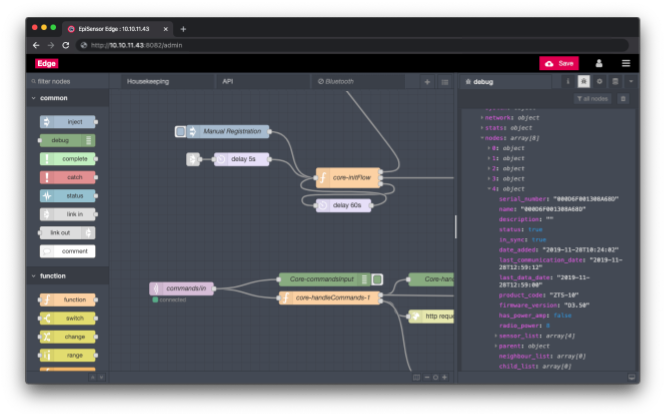
Bridge Modbus, BACnet, MQTT, REST, and site-specific logic on one gateway
Edge is where protocol translation actually happens. Pull data from Modbus devices, expose it to BACnet, republish it over MQTT, or push it into a third-party platform over HTTPS. If a customer already uses EnergyCAP, MRI eSight, Dexma, Energy Elephant, or a custom stack, Edge gives you the control point that adapts field data to that target system.
That makes Edge especially valuable in retrofit projects where “standard” never really means standard.
Keep data processing, control logic, and integrations close to the devices
Because Edge runs on the gateway, it can keep working even when upstream connectivity is poor or intermittent. That matters when you need local buffering, on-site calculations, threshold logic, alarm generation, or protocol continuity at the edge of the network.
For demand response, equipment monitoring, and multi-protocol building integrations, that local control point is often the difference between a robust deployment and a fragile one.
Package and roll out integrations instead of rebuilding them site by site
Edge supports packaged integrations, assets, and deployment logic so repeatable solutions can be rolled out across gateways instead of handcrafted at each location. For OEM, partner, and multi-site projects, that means cleaner releases, clearer versioning, and a better path from pilot to scale.
This is where EpiSensor moves beyond “a gateway with scripts” into a real operational software platform.
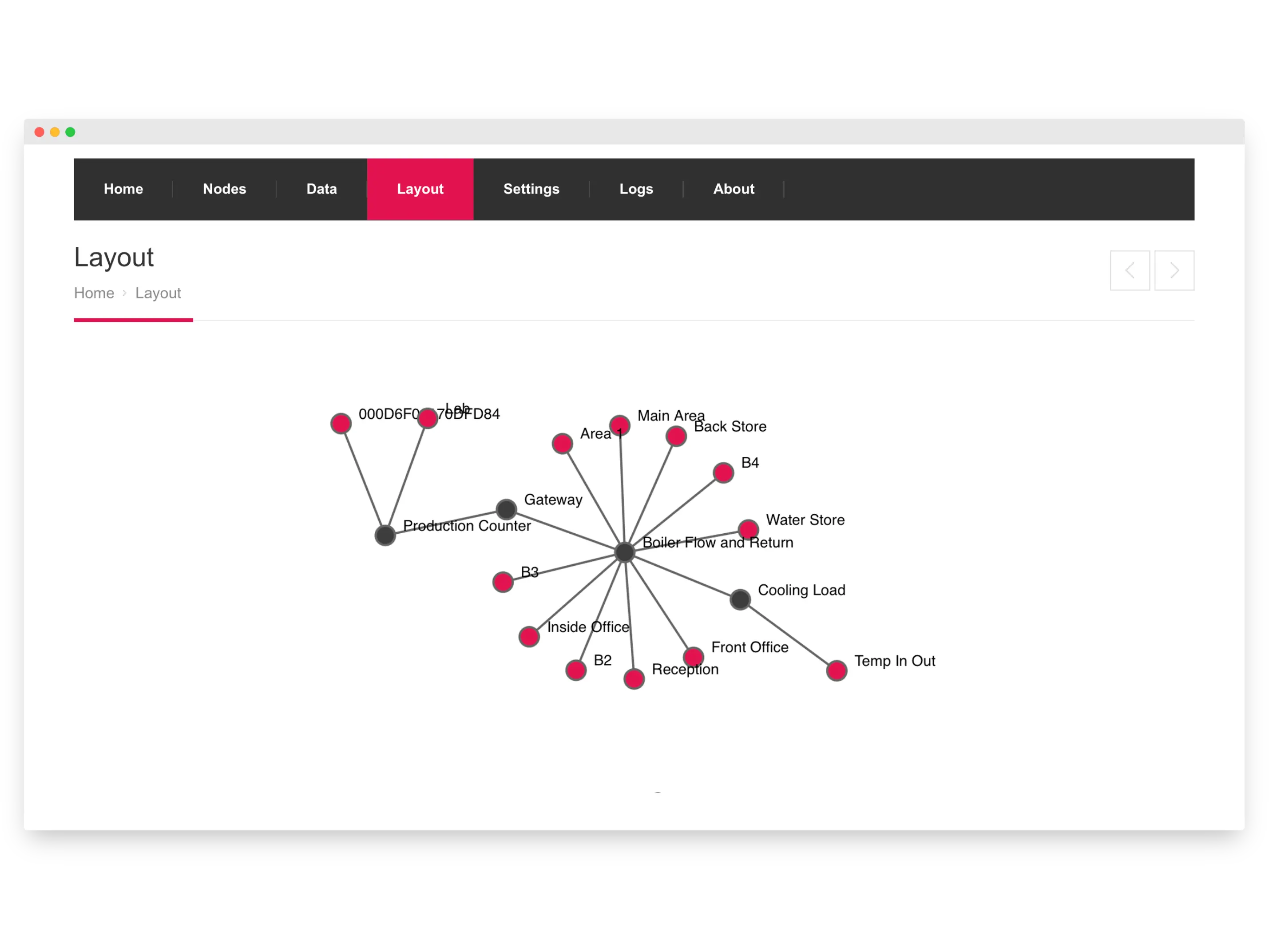
What teams use Edge for in practice
On-site apps and flows
Build and run local logic for site-specific integrations, calculations, and control behaviour.
Protocol adaptation
Translate between building, industrial, and cloud protocols without adding another middleware layer.
Local buffering
Protect data continuity and keep workflows running when connectivity to upstream systems is disrupted.
Local calculations
Perform aggregations, energy calculations, and validation logic before data ever leaves the site.
Alerting and actions
Trigger alarms, workflows, or downstream actions based on live site conditions.
Best fit for Edge
- Retrofit building integrations where protocol mismatch is the real problem
- Energy monitoring projects that need local normalisation before data export
- Demand response and site control projects that need local logic
- Partner or OEM deployments that need a repeatable integration runtime on the gateway
Edge works with the wider EpiSensor stack
- Gateway provides the on-site compute and connectivity layer
- Hardware provides the field data acquisition layer
- Core provides remote fleet operations and rollout
- Compatible platforms show how Edge fits existing EMS and BMS stacks
Planning an Edge integration or gateway software rollout?
Talk to us about your protocol stack, target platform, and deployment model. We can map where Edge fits and what the rollout should look like.